My thoughts feel very jumbled this week so I hope I can coherently convey what I want to talk about. If it feels a little scatterbrained I apologize right now.
Quick anecdote. I’ve lived away from home off and on since I was 20, trying to get used to living with people other than my family and being driven nearly crazy by some roommates and not so much by others. I always lived close enough to home to go home for a weekend here and there. I remember going home and talking to my Mom about the troubles I would have living with other people, people not putting their dishes away, leaving their stuff everywhere, not replacing the toilet paper etc. She would always laugh a little bit when I told her I was going to do better at keeping her house clean when I was there, and she would tell me and she still does tell me, that I would just fall back into the same habits/role I had when I was at home before. She was 100% right. I would leave my dishes in the sink, my laptop on the table, and get Dad whenever I needed a spider taken care of, slipping perfectly back into my role of being the second youngest of the Hertig family. After the discussions we had in my family relations class this week I learned how perfectly normal this is, not necessarily always healthy, but normal.
These roles we play in our families come from something we call the family systems theory and the different systems within the larger system are called subsystems. Basically it’s the roles we take in our families, how we interact as a whole to fulfill the roles we each have and the different groups we make within our own family. For instance some of the subsystems within my own family are; single siblings, married siblings, brothers/sons, sisters/daughters, gamers, those with careers, executive/marital/parental (my parents), etc. The most important being the executive/marital/parental subsystem formed by my parents as equal partners. Each of my married siblings also play this role within their individual family sub-systems as well.
Within each of these subsystems we each play roles which over time become habitual and unintentional. We just get so used to how it’s always been that it’s hard to stop especially when said role might be unhealthy and taking away time from what’s most important or from helping us grow. From what we talked about this week being intentional about our roles in our family system is the most important aspect in my personal opinion. Here’s an example of how an unintentional role could become intentional. Lets say one child has been put in a role as sole care taker of aging parents because it’s what everyone was familiar with. Is this a bad role? No, but because their siblings are so used to them being the care taker they don’t really take the time or think about helping out. The caretaker sibling is then spending very large amounts of time taking care of their parents instead of spending time within their own immediate family, growing within those relationships. Which then might be a catalyst for other problems in their relationships with their spouse and children. It will be hard to break out of this role, but sometimes the band-aid just needs to be ripped off. They would need to talk to their siblings and set clear boundaries with what they are willing to do.
[The following illustration really helped me to understand what kind of boundaries I should be setting. I shouldn’t be completely closed off, but not completely open, setting clear boundaries with everyone.]
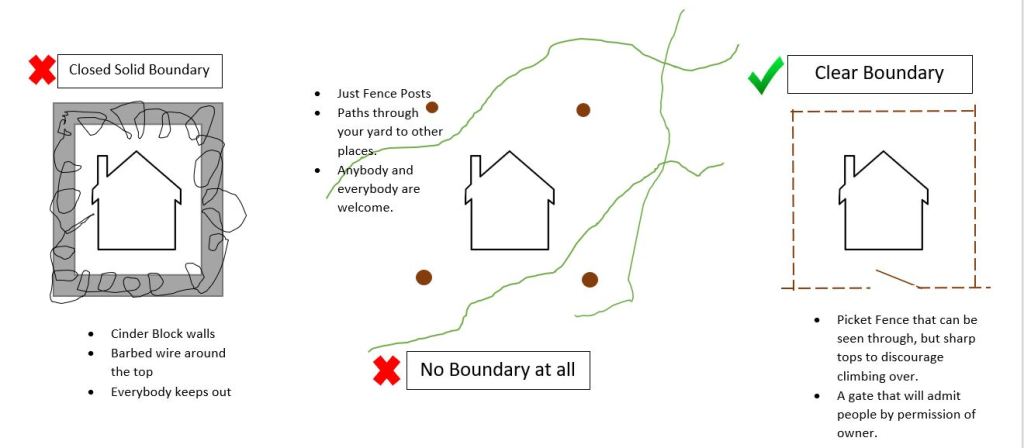
I couldn’t tell you what they should say to their siblings or what the best solution for the problem would be. I do know that the first step should be talking to their spouse about the problem and coming up with possible solutions. Next they could then bring those solutions to the attention of their siblings. Grumbling and complaining might come from the siblings end, but when we get married our family of creation should become our prime obligation. I will add though that though that this isn’t a one size fits all solution. Sometimes there aren’t siblings close to help with care or enough money to hire help. In these situations I would say just do the best you can.
As husband and wife the goal is to work and become one, communicating with each other and not seeking outside help individually. Sometimes we do need help, but it should always be done together. Now I did say that it’s the goal, but no one is perfect and all you can do is help and work together. We have a tendency to seek out allies in our friends, co-workers, and other family members wanting to complain or vent about each other or our family circumstances. In the end though being able to look to each other as partners and solving things together will help bring you closer together and be good examples to your children, they watch and understand more than we think.
I feel like a lot of this has been saying what should be done and I hope I’m not making anyone feel like an awful family member because nobody is perfect and we all have things we can be doing differently, but it all come with time. I do believe though that as we make our love for each family member our driving force and not fear of possibly offending or upsetting people we can do things we wouldn’t think possible.
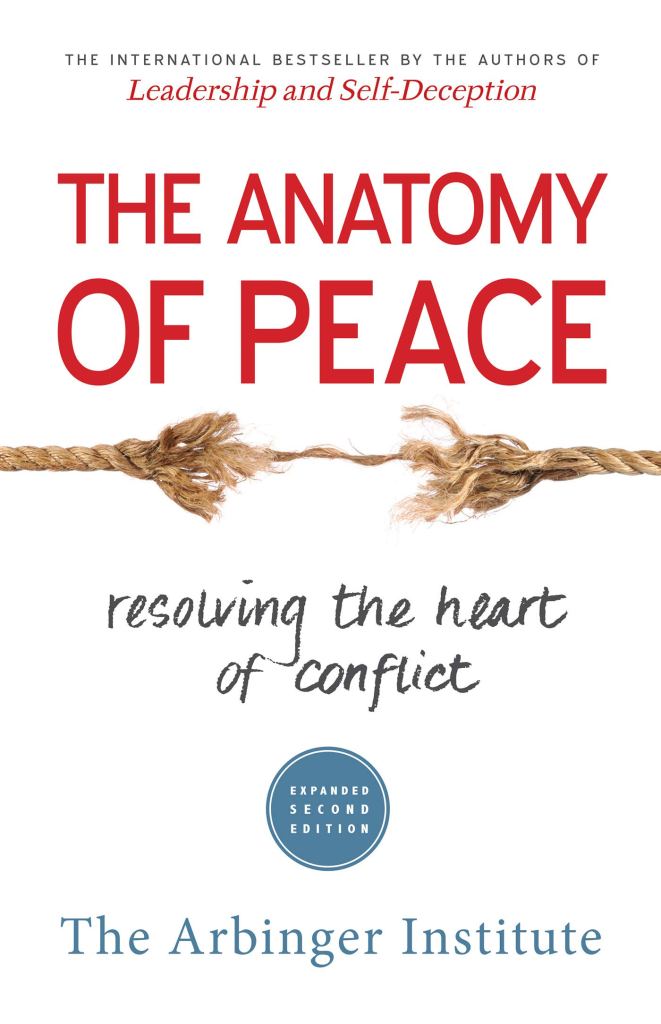
Which brings me to a quick plug for a book called the Anatomy of Peace by The Arbinger Institue. We are reading it in my parenting class here at school. This book has completely changed the way I look at people and the way that I look at myself. It has made me aware of things I need to change within myself, but also places where I’m doing well. It might sound corny, but it focuses on helping people find peace within themselves in the face of conflict and trial. Many of us struggle within our families, conflict arises and were not really sure how to handle it and most of the time become angry and bitter because of it. If you read this book and work on adding the principles it talks about into your own life It can trickle into the lives of those around you, especially your family. The institute did not contact me, this is not a paid promotion, this is my sincere opinion about this book. Guys I really do not enjoy reading all that much, but I have a hard time putting this book down and not reading ahead.
If you have any questions please leave it in the comments section and I will do my best to answer it. I’m not an expert, but I can share things I’ve learned. Also if you just want to say something feel free, I would ask you to keep your comments respectful, I’m just a college student sharing opinions and knowledge.

 Relationship Backpack
I needed this insight! I totally see where I fall into the same role in my immediate family. Love how you said it may not be healthy, but it IS normal.
Keep blogging 😁👍
LikeLike
Katie, I have loved both of your blog posts. I genuinely enjoy hearing about the lives and thoughts of those I care about. It’s interesting to think about why we take on certain roles in our life and why we feel stuck in them at times. Your blog has me thinking about the role I play and if it is a benefit or detriment to the ones I care most about.
LikeLike
I enjoyed this. It’s always nice for some self reflection.
LikeLike